

Glass offices with a shared printer station at dusk

Professional Services

Bring order to a print environment built over years of growth.

Professional services firms often accumulate devices, vendors, agreements and support processes office by office. Add acquisitions, changing workflows and confidential client information, and the environment can become difficult to see and manage as a whole. Revolution Office brings greater visibility, standardization, security and accountability to the entire print environment.

Simplify the environment. Protect sensitive information. Give leadership greater control.

Visibility, standardization and control

Professional Services in Practice

Complex environments can produce measurable opportunities.

Armanino LLP

Five-year savings at Armanino LLP

$817,000

Armanino LLP

Remaining legacy lease obligations covered

$340,000

Armanino LLP

Devices across 14 locations

93

Armanino LLP

Lease and service agreements in the original environment

19

Lockton

Cost reduction across six Pacific Division offices

$105,000

Heffernan Insurance Brokers

Savings after replacing 25 machines across 11 offices

$210,000

See More Success Stories

In Their Words

What professional services clients say.

We’ve enjoyed our relationship with the owners and management of Revolution Office. Their team has consistently delivered on their promises and have provided a first-class experience for my associates.

Timothy Noonan
CEO, Lockton Pacific

Revolution Office performed an extremely detailed assessment of our current devices and needs, which led to a very thoughtful proposal and solution. We were surprised at the amount of the savings with Revolution Office, compared to the manufacturers quote.

John Petersen
CIO, Heffernan Insurance Brokers

What We Find

Complexity accumulates one office, device and agreement at a time.

Multiple Vendors and Agreements

Different offices may operate under different leases, service agreements, equipment standards and renewal dates.

Limited Fleet Visibility

IT, finance and operations may not have one reliable inventory showing what equipment exists, where it is located, how it is being used and what it costs.

Inconsistent Technology

Devices accumulated over time can create unnecessary variation in models, drivers, supplies, features and support requirements.

Confidential Information at Shared Devices

Client, employee, financial and other sensitive documents may be printed to shared devices without appropriate controls.

Equipment That No Longer Fits the Work

Some devices may be overutilized while others are significantly underused because the fleet evolved rather than being deliberately designed.

Decentralized Supplies and Service

Office managers and employees may spend time ordering toner, managing service calls or solving printer problems locally.

Aging Equipment

Older equipment may create reliability, support and security concerns even when it remains technically operational.

Growth Without a Fleet Strategy

New offices and acquisitions can add another vendor, agreement and equipment standard instead of becoming part of an established program.

The Complete Environment

The lease schedule doesn’t tell you how the fleet is performing.

Understanding a professional-services print environment requires more than reviewing copier agreements. The Managed Print Assessment documents the devices, utilization, service, supplies, costs, agreements, workflows and business requirements across the organization.

Evaluate
  • Device inventory
  • Make and model
  • Location
  • Age
  • Utilization
  • Service performance
  • Supply requirements
  • Lease / ownership status
  • Print-management requirements
  • Security requirements
  • Department/workgroup requirements
  • Existing financial obligations
  • Lifecycle

Understand the current state before designing the future state.

See How the Assessment Works

The Future State

Turn a fragmented environment into a managed program.

Fleet Standardization

Reduce unnecessary equipment variation and establish technology standards appropriate for different users, departments and offices.

Centralized Visibility

Give IT, finance and operations a clearer view of devices, utilization, service, supplies and costs across the organization.

Print Management & Security

Apply appropriate controls to shared devices and sensitive workflows while improving visibility into how the environment is being used.

Automated Supplies

Monitor supported devices and automate replenishment to reduce local toner purchasing and administrative work.

Centralized Service

Coordinate support across offices through one accountable managed program.

Lifecycle Management

Evaluate equipment continuously so aging, unreliable or underutilized devices are addressed based on need.

Acquisition Integration

Bring newly acquired offices into established technology, service and reporting standards over time.

Ongoing Optimization

Continue reviewing utilization, cost and performance after implementation instead of allowing the environment to become fragmented again.

Explore Managed Print Services

Professional Services in Practice

Armanino LLP: 93 devices, 14 locations and 19 agreements.

The Challenge
Armanino LLP was managing 93 devices across 14 locations, multiple vendors and 19 different lease and service agreements. The fragmented environment contributed to unnecessary expense, inconsistent service and increased security risk.

The Strategy
After competing for and winning the business through a formal competitive process, Revolution Office developed a strategy that standardized equipment, addressed legacy lease obligations, deployed print-management technology, centralized account management and strengthened data security.

Current State

  • 93 devices
  • 14 locations
  • 19 agreements
  • Multiple vendors

Revolution Office Strategy

Standardized equipment

Legacy obligations addressed

Print management

Centralized account management

Improved data security

The Result

  • $817,000

    Saved over the five-year lease term

  • $340,000

    Remaining lease obligations covered by Revolution Office

  • Substantial waste reduction
  • Nearly all personal printers eliminated

The result was more than new equipment. It was a more standardized, centrally managed print environment.

Revolution Office impressed us during the RFP process with their understanding of our business. Their expertise and proactive approach made the transition seamless, and the savings speak for themselves. We consider them a trusted partner and have confidently recommended them to others.

Chris Siegfried, CFO, Armanino LLP

Independent by Design

Standardization doesn’t mean replacing everything.

The objective of the assessment is not to justify a predetermined equipment sale. Existing devices are evaluated based on utilization, reliability, age, security, workflow and economics. Equipment that continues to make sense can remain part of the environment.

The data determines what should stay, what should change and when.
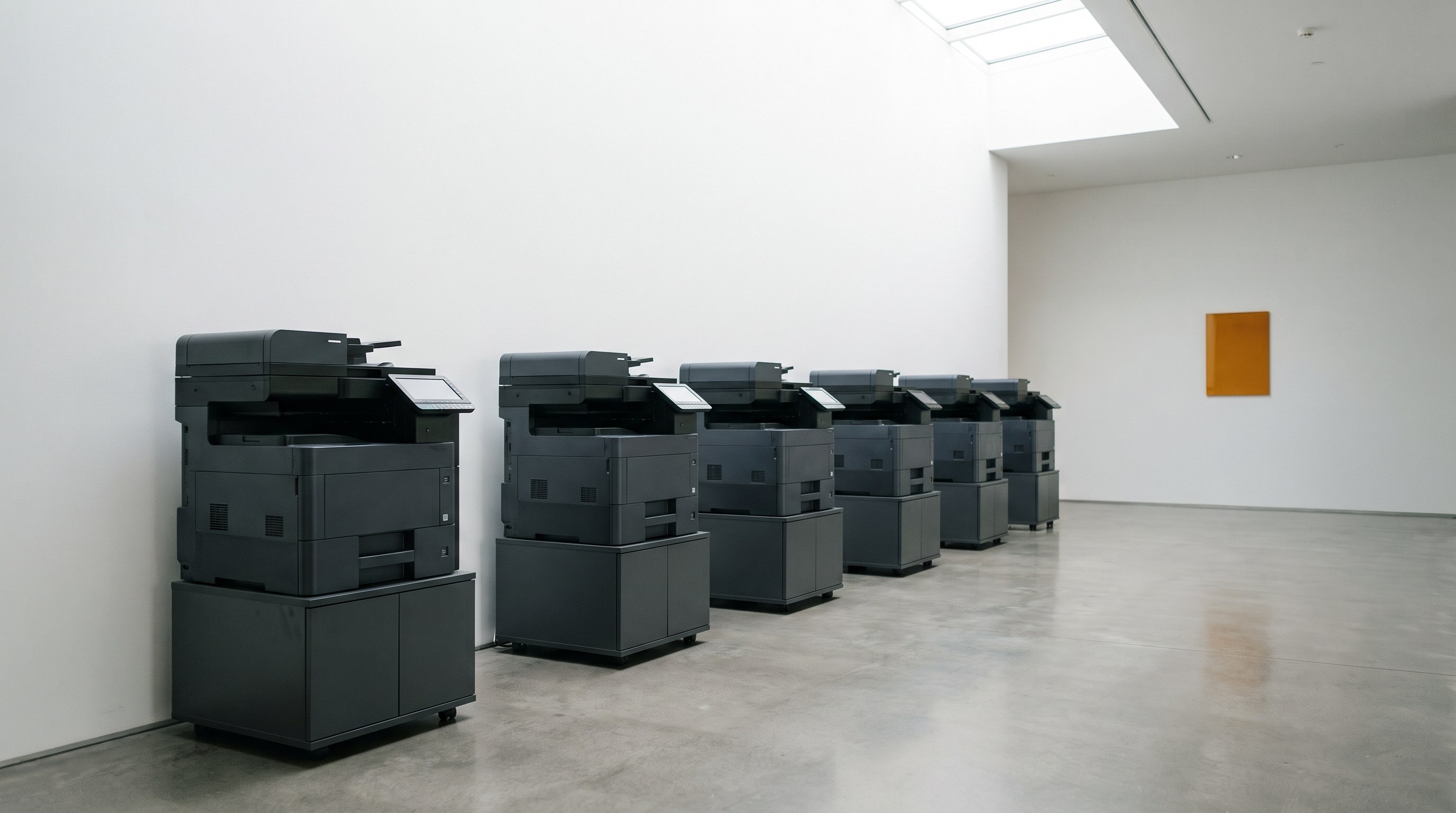
A standardized row of multifunction printers along an office wall

Mergers & Acquisitions

Don’t let every acquisition become another permanent print environment.

An acquired office may arrive with its own printers, leases, service providers, supply processes and renewal dates. Revolution Office can document those inherited obligations and technologies, determine what should remain in place, and build a roadmap for integrating the location into the broader managed environment.

Integration can happen intelligently over time.
It doesn’t require an immediate rip-and-replace.

Evaluate:

  • Existing leases
  • Remaining obligations
  • Device age
  • Equipment compatibility
  • Service agreements
  • Usage
  • Supplies
  • Security
  • Existing print-management software
  • Refresh timing
Two staff members walking an office corridor during a site walk

Existing Obligations

An existing lease doesn’t always mean you have to wait.

A Managed Print Assessment can model current lease and service obligations alongside the economics of a future-state environment. Depending on the circumstances, there may be a financially viable path forward before every existing agreement reaches expiration.

At Armanino, Revolution Office covered $340,000 in remaining lease obligations as part of a transformation that produced $817,000 in savings over the five-year lease term.

Organizations typically save 20–50% on their copier and printer environments with Revolution Office, even when they’re in the middle of an existing lease.

The assessment analysis handed across a conference table

Print Management & Security

Confidential work requires more than a shared printer.

Professional services organizations routinely handle confidential client, financial, employee and business information. Print-management technology can help organizations apply appropriate controls to shared devices while improving visibility into how the environment is being used.

Capabilities can include:

  • Secure print release
  • User authentication
  • Usage tracking
  • Department/client/project allocation
  • Device-level security configuration
  • Centralized print policies
  • Reporting
  • Firmware/lifecycle management

Where Cost Recovery Matters

Know who is printing, and why.

For organizations that allocate print costs to clients, matters, projects or departments, print-management technology can provide greater visibility into usage and help support more accurate allocation and reporting.

Potential capabilities:

Client codes

Matter codes

Project codes

Department allocation

User-level reporting

Cost-center reporting

Built for Multi-Office Firms

Local support. Enterprise visibility.

At the Office
  • Reliable equipment
  • Straightforward service
  • Automated supplies where supported
  • Technology appropriate for local requirements
  • Less printer administration
Across the Organization
  • Fleet inventory
  • Technology standards
  • Service reporting
  • Cost visibility
  • Security policies
  • Lifecycle planning
  • Centralized accountability

Your organization governs the environment. Revolution Office manages it.

Explore National Service & Support

Less for Each Office to Manage

Routine printer administration shouldn’t become office-manager work.

Automated monitoring, supply replenishment and centralized service coordination can reduce the routine work required from office administrators, IT and local employees while providing better fleet visibility across the organization.
  • Automated meter collection
  • Device monitoring
  • Supply monitoring
  • Automated toner replenishment where supported
  • Centralized service coordination
  • Fleet reporting
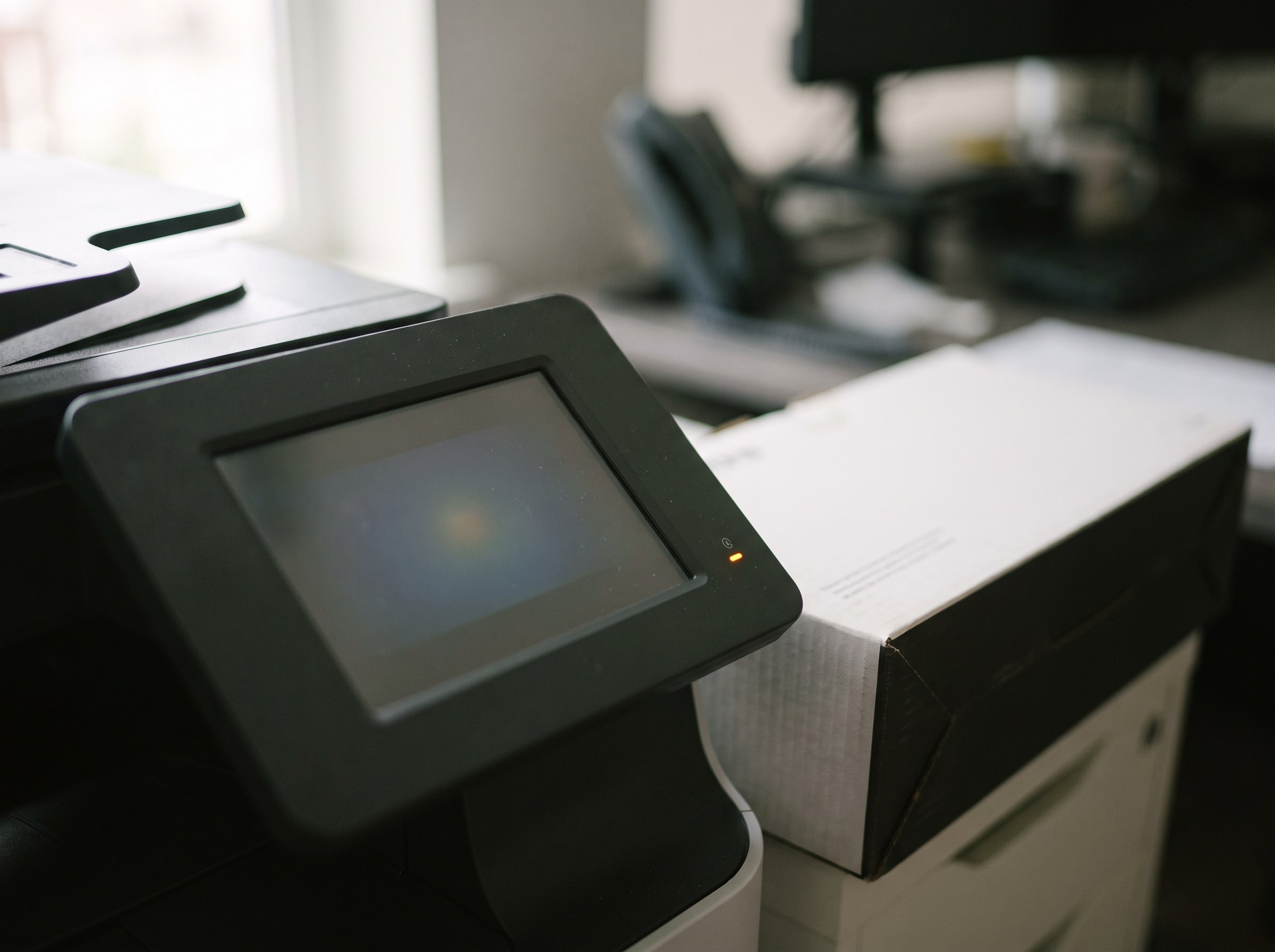
Multifunction printer control panel with a status light and a toner box

Ongoing Management

Don’t let a standardized fleet become fragmented again.

Professional-services environments continue to change after implementation. Offices open and close. Firms acquire businesses. Employees relocate. Utilization changes. Equipment ages. A Managed Print Services program should continue evaluating the environment as the organization evolves.

Include
  • Fleet reporting
  • Utilization
  • Service performance
  • Supply activity
  • Device lifecycle
  • Cost trends
  • New offices
  • Acquisitions
  • Optimization opportunities
  • Quarterly Business Reviews

The assessment establishes the baseline. Ongoing management keeps the environment optimized.

Professional Services Experience

Experience across complex, client-focused organizations.

Featured Client

Armanino LLP

Additional Professional Services Clients
Jackoway, Tyerman & Wertheimer
Ziffren Brittenham LLP

Common Questions

Questions Professional Services Firms Ask

Can you manage multiple offices as one print environment?

Yes. Revolution Office can centrally manage service, supplies, reporting and fleet strategy across distributed locations while accounting for the requirements of individual offices and workgroups.

Do we have to replace all of our equipment?

No. The Managed Print Assessment evaluates existing equipment based on utilization, age, reliability, security, workflow and economics. Devices that continue to meet the organization’s requirements can remain in the environment.

What happens to leases we inherited through acquisitions?

We document each agreement and remaining obligation and incorporate it into the financial analysis. The goal is to determine the most sensible transition path rather than waiting automatically for every contract to expire. At Armanino, Revolution Office covered $340,000 in remaining lease obligations as part of its broader fleet transformation.

Can print be tracked by client, matter, project or department?

Where required, print-management software can provide user-level reporting and support allocation by client, matter, project, department or other organizational structure. The appropriate configuration depends on the firm’s workflow and business requirements.

How do you help protect confidential documents?

Print-management and device-security technologies can support capabilities such as authenticated release, user tracking, centralized policies and device security controls. The appropriate solution is determined during the assessment based on the organization’s requirements.

Can you support us as we acquire new offices?

Yes. Newly acquired locations can be assessed individually and incorporated into the organization’s broader technology, service, supply and reporting standards over time.

What does the Managed Print Assessment cost?

Nothing. The assessment is provided at no cost and without obligation. We document the current environment, identify opportunities for improvement and provide a data-backed future-state recommendation. You keep the analysis whether or not you move forward with Revolution Office.

The First Step

See the complexity that’s hiding across your print environment.

Start with a no-cost Managed Print Assessment. We’ll document the devices, utilization, costs, agreements, service, supplies and business requirements across your organization, identify opportunities for improvement, and show you what a more standardized and manageable future state could look like.

  • No cost
  • No obligation
  • You keep the analysis