

Heffernan Insurance Brokers
$210,000documented savings
Insurance
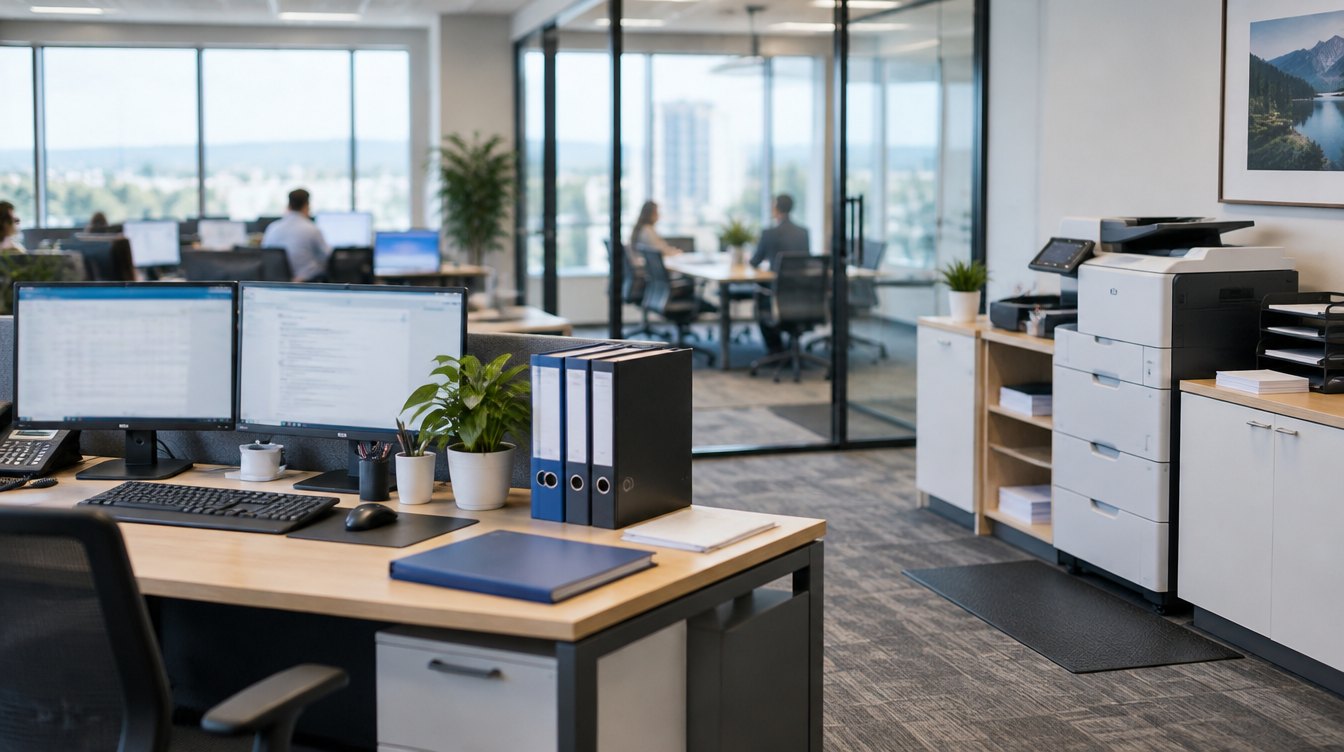
Insurance organizations often operate across multiple offices, departments and acquired locations, with equipment, contracts, service and technology decisions made at different times. Revolution Office helps bring those environments into a more coordinated strategy with greater visibility, consistent support and centralized accountability.
One clearer view across the organization. Less vendor complexity. Better control of the print environment.
Centralized accountability across locations
Documented Insurance Results
11 offices
$210,000documented savings
Six offices
$105,000documented savings
What We Find
Multi-office insurance organizations can accumulate equipment, agreements and service processes over time as locations open, teams grow and acquisitions are integrated. The result may be an environment that works location by location but is difficult to manage as one organization.
Different offices may operate different device models, contracts and service arrangements based on decisions made at different times.
Support processes and service performance can vary by office when the environment is managed through multiple providers.
Applications, policy documents, employee information and other confidential materials can move through shared printers and multifunction systems that should be included in the organization’s broader security strategy.
Certain offices or departments may experience heavier transactional or seasonal workloads while other equipment remains underutilized.
Multiple agreements, renewal dates and vendors can make procurement and lifecycle planning unnecessarily difficult.
Leadership may have limited consolidated reporting into utilization, service, costs and fleet performance across locations.
Built Around Insurance Operations
What Changes
Create a documented view of devices, utilization, agreements, service and cost across offices.
Reduce unnecessary variation in equipment, supplies, drivers and support while preserving specialized requirements where necessary.
Coordinate service and escalation through one accountable Revolution Office relationship across the managed environment.
Evaluate secure release, user authentication, print policies, reporting and device-security controls based on organizational requirements.
Identify opportunities to consolidate fragmented service relationships and align future equipment lifecycle decisions.
Evaluate newly acquired offices against the existing environment so technology and support can be integrated intentionally rather than simply inherited.
Continue monitoring utilization, service performance, lifecycle and changing location requirements over time.
Growth & Acquisitions
When an insurance organization grows through acquisition, the print environment often arrives with its own devices, contracts, service relationships and renewal dates. Revolution Office can document the inherited environment and develop a transition strategy that considers both the existing obligations and the organization’s broader technology standards.
Stage 01
Document equipment, agreements, utilization and current service.
Stage 02
Evaluate the acquired environment against the organization’s broader standards and requirements.
Stage 03
Develop a transition strategy that considers existing contractual obligations.
Stage 04
Move toward a more consistent technology and support model where the economics and business requirements support it.
Heffernan in Practice
Heffernan Insurance Brokers engaged Revolution Office to assess a distributed environment spanning 11 offices. The resulting strategy addressed the fleet, service model and reporting structure while delivering $210,000 in documented savings.
Heffernan’s future-state program addressed 25 devices across 11 offices as part of a broader effort to improve cost, service and consistency.
Mid-Contract Flexibility
Lockton Pacific is a documented example of an insurance organization that evaluated its environment while still in an existing manufacturer agreement. Revolution Office developed a transition strategy that addressed the existing obligations while improving the environment and delivering $105,000 in documented cost reduction.
Print Management & Security
Insurance organizations may print and scan applications, policy documents, claims information, employee records and other confidential materials. Shared print devices should be included in the broader security strategy rather than treated as standalone office equipment.
Depending on the environment, controls may include:
Multi-Office Service
Revolution Office supports multi-location organizations through centralized service coordination, escalation, reporting and account ownership across the managed program, reducing the need for customers to manage separate service relationships office by office.

Less for IT & Operations to Manage
Automated monitoring, supply replenishment, meter collection and centralized support can reduce the day-to-day work required from local office teams and IT.
Beyond Print
Applications, policy documents, client records, forms, approvals and other information often move through multiple people and systems. Revolution Office provides Document Workflow & Automation solutions that can help improve how those documents are captured, routed, approved, stored and retrieved.
Insurance Experience


In Their Words
Revolution Office performed an extremely detailed assessment of our current devices and needs, which led to a very thoughtful proposal and solution. We were surprised at the amount of the savings with Revolution Office, compared to the manufacturer’s quote.
We’ve enjoyed our relationship with the owners and management of Revolution Office. Their team has consistently delivered on their promises and have provided a first-class experience for my associates.
Common Questions
Yes. Existing lease and service obligations are documented during the assessment and incorporated into the future-state economics. Depending on the situation, the right strategy may involve an earlier transition, a phased transition or retaining some equipment until the economics support a change. Lockton Pacific is one documented example of an insurance organization that successfully changed its environment while still operating under an existing manufacturer agreement.
Yes. Revolution Office supports distributed and multi-location environments through centralized service coordination, escalation, reporting and account ownership. Service requirements are established around the customer’s actual locations, equipment and operating needs rather than assuming every office is identical.
We can document the acquired location’s devices, agreements, service structure and requirements and compare them with the organization’s broader print strategy. From there, Revolution Office can recommend whether equipment should be retained, standardized, consolidated or transitioned over time.
Print-management and device-security controls can be selected based on the organization’s requirements. Depending on the environment, solutions may include secure release, authentication, print policies, audit/reporting capabilities and device-security controls.
Yes. Revolution Office provides Document Workflow & Automation solutions including document and content management, automated capture and scan workflows, routing, approvals, search and retrieval, digital forms and integration with supported business applications.
Revolution Office provides office, production and specialized print technology from manufacturers including Canon, Xerox, Ricoh, HP, Sharp, Kyocera, Brother, Lexmark and KIP. Our broad portfolio allows us to select technology around the requirements of the environment rather than forcing every customer into one product family.
Depending on the requirement, solutions can include desktop printers and multifunction devices, A3 and A4 systems, scanners, label printers, production print and finishing equipment, and wide-format technology.
The assessment may also recommend keeping equipment you already own when it continues to meet the organization’s operational, financial and security requirements.
The Managed Print Assessment is provided at no cost and without obligation. Revolution Office documents the current environment, including devices, utilization, costs, agreements, service, supplies and relevant business requirements, and develops a data-backed current-state analysis and future-state recommendation.
You keep the analysis whether or not you choose to move forward with Revolution Office.
The First Step
Start with a no-cost Managed Print Assessment. We’ll document the devices, locations, utilization, costs, agreements and requirements across the environment, identify opportunities for improvement, and show you what a better-managed future state could look like.